Related: How Long Do Dog GPS Tracker Batteries Really Last?
I live in Bend, Oregon, I run trails with two dogs, and I volunteer on a search and rescue team that gets called out for missing dogs more often than most people would guess. My husky has escaped three times. The third time she was gone for 11 hours in the Deschutes National Forest, and the search ended with a neighbor's phone call, not with an app. That day is the reason I care about exactly one thing more than any feature on a spec sheet: whether the tracker still works where there are no bars.
So when I talk about a no subscription dog GPS tracker, I am not talking about saving a little money every month. I am talking about the difference between a device that depends on a cell tower and a device that finds its own way home. The monthly fee is the easy part to argue about and the least important part of the decision. The hard part is coverage: what happens to that little plastic box on your dog's neck when the dog is three miles into a canyon and your phone says "No Service."
Four models are worth your attention right now, and they split into two very different jobs. One is a real off-grid tracking system with a handheld and a compass. Three are compact tags that live on a phone network and cost a fraction as much. Buying the wrong category is the mistake I see most often, so here is how each one actually behaves.
What "no subscription" actually means
There are two honest ways to sell a tracker without a monthly fee, and one dishonest way.
The honest way, number one: the collar and a handheld talk to each other directly, and the handheld carries the maps. No towers, no plan, no renewal email. That is how the Dogtra PATHFINDER2 MINI is built, and it is the only architecture I would stake a bad night on.
The honest way, number two: the tag borrows a phone network, usually Apple Find My, and reports its location through the phones of strangers who happen to walk past your dog. In a subdivision with 400 houses, that works surprisingly well. In the pines above Tumalo, with nobody around for miles, it works not at all.
The dishonest way: a Bluetooth gadget marketed with the words "unlimited range." Bluetooth has a range measured in feet, not miles. If the listing brags about unlimited range and no subscription, read the fine print twice, then go buy something else.
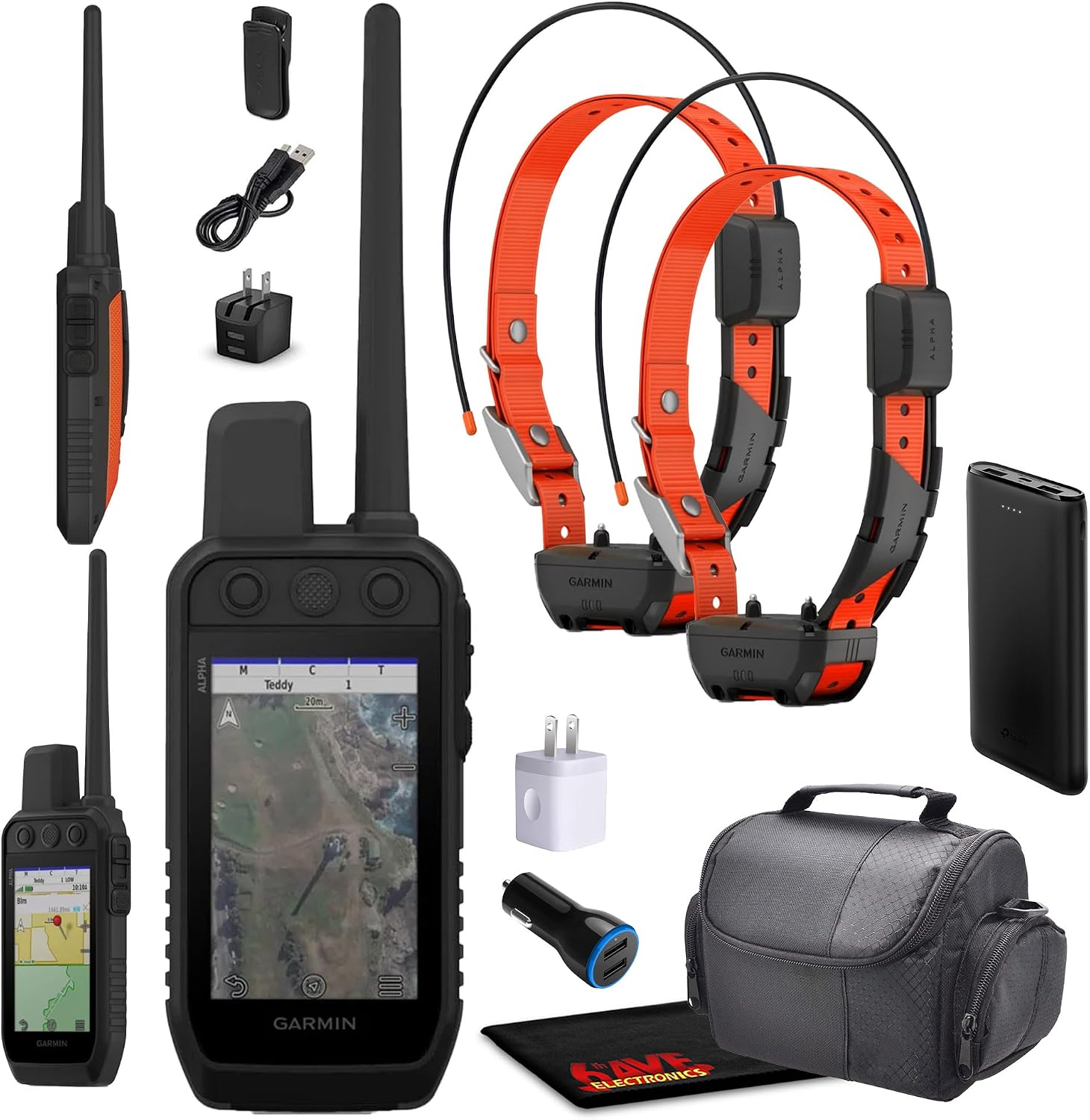
Best Overall for Real Off-Grid Miles: Dogtra PATHFINDER2 MINI
This is the one I would hand to a friend who hunts chukar in the breaks or runs dogs in the Cascades. It is a live GPS tracking system with a handheld unit, a built-in compass, offline maps, and a four-mile range. The offline maps are the part that matters to me. A map that needs a data connection is a map you will not have at the exact moment you need it, and the PATHFINDER2 MINI stores the map on the handheld instead of asking a tower for it.
It also carries a GPS fence and expands up to 21 dogs, which is a real number for a hunting club or a kennel, not a marketing fantasy. The collar is rated for dogs 15 pounds and up, so a Jack Russell or a toy breed is out of the question here. That weight floor is not a suggestion. An oversized unit on a small neck is an injury waiting to happen, and a tracker that hangs low catches brush.
One thing I will say plainly: this system includes e-collar training functions, and I do not review containment or stim gear. That is a different conversation with different ethics, and I am not the person to walk you through it. What I am evaluating here is the tracking half, the half that finds a dog. Judged on that alone, it is the only unit in this group built for the place where cell coverage goes to die.
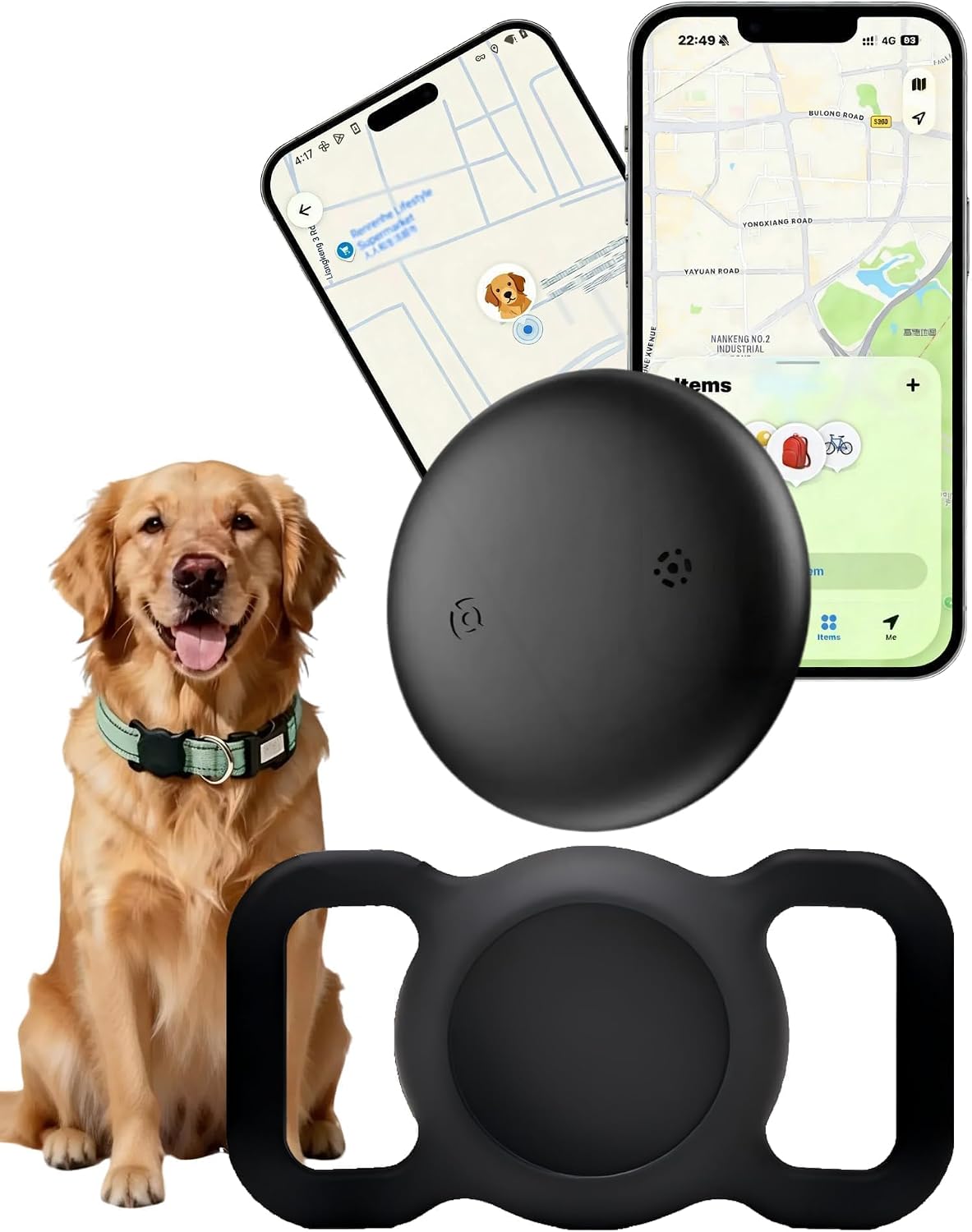
Best for Mixed Households: GPS Tracker for Dogs (iOS & Android), No Subscription Real-Time Tracking
This is the pick for the household that is split between an iPhone and an Android, because it is the one in this group that works with both. It advertises real-time tracking with no subscription, which is a combination plenty of buyers want and few products deliver honestly, so it deserves a careful look before you commit.
Here is the question I would ask before buying: how does it report a position when there is no cell signal? If the answer is "through nearby phones," treat it as a town and trailhead tracker, and be honest with yourself about where your dog actually runs. If the answer is "direct to the handset," then you have found something unusual at this size. Either way, the missing monthly fee is a genuine advantage, and it is the reason this one sits in the middle of the group rather than at the top.
For a dog that bolts out an open gate in a neighborhood with plenty of people walking around, this is a sensible, low-commitment choice.
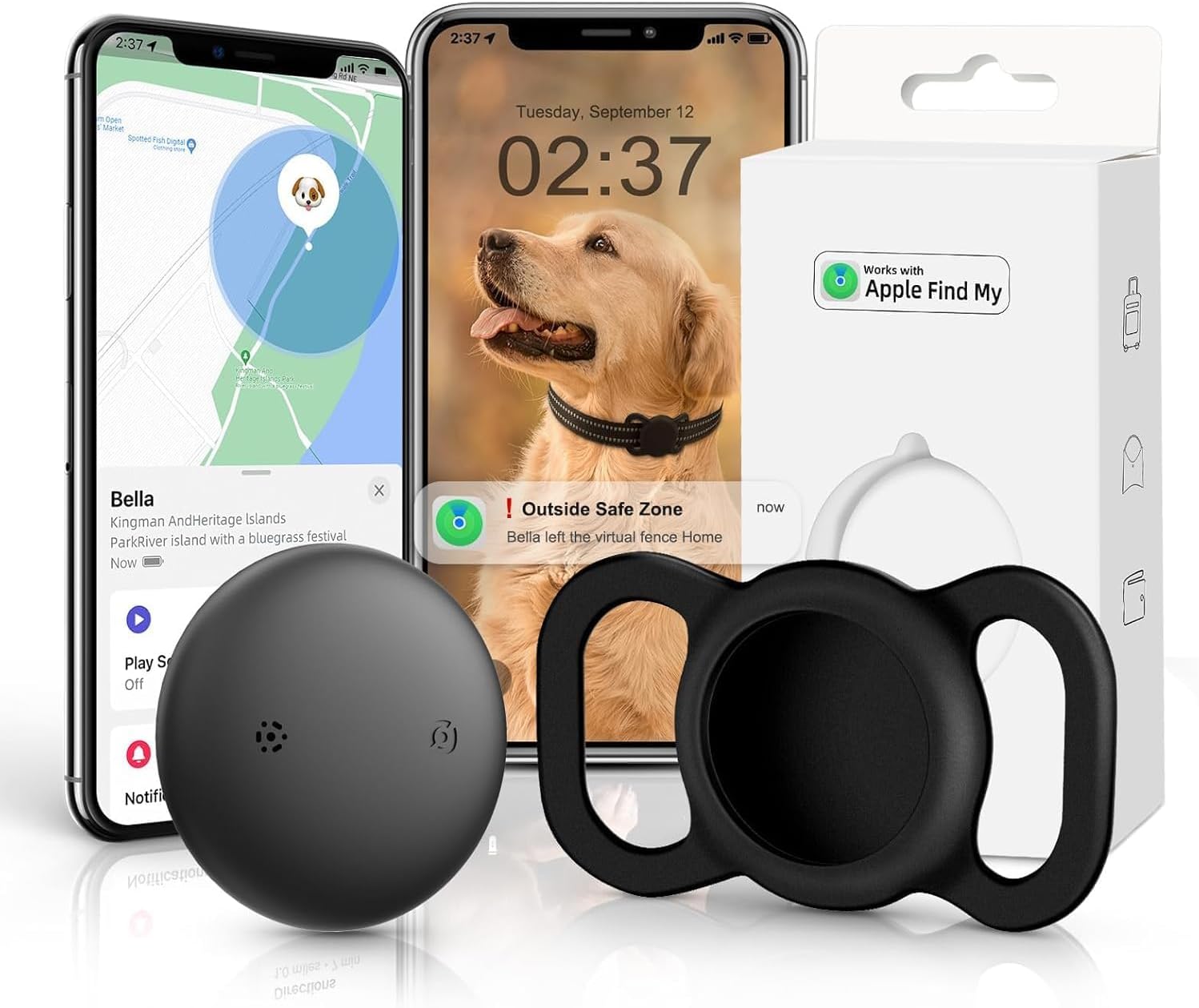
Best for iPhone Households: iOS Smart GPS Dog Collar, Mini Pet Activity Tracker
This one is built for the Apple side of the house, and it throws in activity tracking, which is the feature people use every day and the one they forget they wanted. No monthly fee, mini form factor, collar mounted. For a dog that spends most of its life in town and gets walked twice a day, the activity data is genuinely nice to have, and the location side covers the ordinary emergencies: a slipped collar, a gate left open, a dog that follows a scent two streets over.
What it is not is a backcountry device. If your dog runs off-leash in national forest, understand that this category of tracker depends on a phone network to relay a position, and there are no phones in the trees. That does not make it a bad product. It makes it the right product for a specific life, and the wrong one for mine.
The mini size is a real benefit for small and medium dogs, because weight on the neck matters more than most owners realize. Keep an eye on the mount and the strap, since a lightweight tag is exactly the kind that disappears in thick brush when the attachment gives.
Best Lightweight Tag: Pet GPS Tracker Collar, Mini IP67 Finder Tag
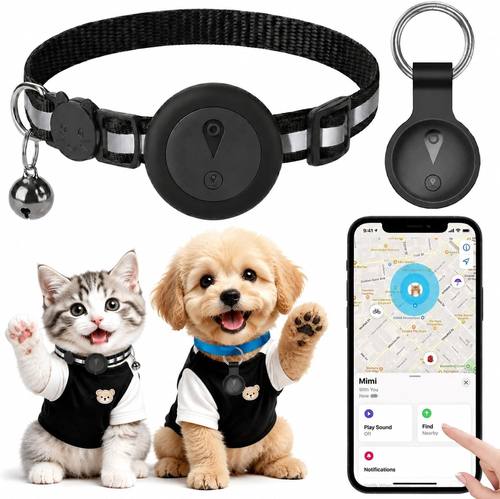
The smallest option here, and the one with the toughest rating: IP67 waterproof, which means rain, mud, creek crossings, and a dog that swims every day of the summer. It works with Apple Find My and carries no monthly fee. The black finish is a small thing that I happen to appreciate, because a bright tag on a black dog is an invitation to a stranger's curiosity.
I will be straight about the category. Find My based trackers are only as good as the phones around them, so the practical coverage is "places where people are." That is a real limitation and also a real strength, because the network already exists and costs you nothing. For a small dog in a suburban or urban setting, this is the least intrusive, least expensive way to answer the question "where is she?" within a few minutes.
Check the attachment the day it arrives. Hang the collar off a doorknob and pull on the tag the way a fence would. I have found two trackers in the woods over the years, both of them off the dog and both of them still working. The electronics were fine. The clip was not.
How I evaluate these trackers
Four things, in this order.
First, the coverage model. Does the location travel over a cell network, a stranger's phone, or a direct link to a handheld? Everything else is secondary, because a tracker that cannot report a position is a rock.
Second, battery duty cycle. A tracker that updates every ten seconds gives you a beautiful live view and a dead battery by mid-afternoon. A tracker that updates every few minutes lasts longer and still tells you where to start looking. Live tracking is a party trick. Recovery is the job.
Third, attachment and fit. This is where trackers actually fail, and it is the thing no spec sheet mentions. Check the ring, check the clip, check the weight on the neck.
Fourth, recovery features. Last known location, geofence alerts, and a light you can trigger at night. I want an app that shows the last position it ever had, even when there is no signal to refresh it. An app that needs a connection to display the last known location is an app that goes blank exactly when you need it.
I do not quote prices in this piece because they move constantly. Check current Amazon price on each listing, and then do the math that actually matters: a monthly plan over three years often costs more than the hardware. That is the argument for this entire category, and it is a good one.
The comparison table
| Tracker | Best for | Coverage model | Recovery features | Notes |
|---|---|---|---|---|
 Visit on Amazon → Dogtra PATHFINDER2 MINI |
Backcountry, hunting, multi-dog kennels | Direct handheld to collar, 4-mile range, offline maps | Live tracking, GPS fence, compass, expandable to 21 dogs | Dogs 15 lbs and up. Includes training functions I do not review |
 Visit on Amazon → GPS Tracker for Dogs (iOS & Android) |
Mixed phone households | Real-time tracking, works with iOS and Android | Real-time location, no subscription | Confirm how it reports position where there is no coverage |
 Visit on Amazon → iOS Smart GPS Dog Collar |
iPhone owners who also want activity data | Works with Apple iOS | No monthly fee, activity tracking, collar mount | Best close to home, where phones are plentiful |
 Visit on Amazon → Mini IP67 Finder Tag |
Small dogs, swimmers, wet climates | Apple Find My, IP67 waterproof | No monthly fee, activity tracking, finder tag | Inspect the attachment point on day one |
The pattern in that table is the whole guide. Range and price track together, and so do range and weight. Decide what your dog's worst day looks like, then buy for that day, not for the average Tuesday.
Should you buy the Dogtra PATHFINDER2 MINI?
If your dog runs off-leash in country with no bars, yes. It is the only unit in this group that does not need a tower or a stranger's phone to tell you where your dog is, and the offline maps mean the answer is still on the screen when the coverage is not. The four-mile range and the 21-dog expansion make it the obvious choice for hunters and kennels.
The tradeoffs are honest ones: it costs the most by a wide margin, it adds a handheld you have to carry and charge, and it will not fit a dog under 15 pounds. If you run a terrier in the suburbs, this is overkill in every direction. If you run a husky in the Cascades, it is the only one of the four I would trust on the day it matters.
Should you buy one of the mini tags instead?
For most dog owners, yes, with eyes open. If your dog's escapes happen in town, at the trailhead, or through a gate, one of the three small tags will find her faster than a system that requires you to learn a handheld. The iOS Smart GPS Dog Collar adds activity tracking. The mini IP67 finder tag adds waterproofing and the smallest footprint. The iOS and Android model covers the mixed household.
What none of them do is replace a tower-free system in deep country. Buy the tag for the life your dog actually lives, check current Amazon price on the listing, and put your money into the category that matches your worst case rather than the best one.
The night my husky was gone for 11 hours, the technology failed me and a neighbor's phone call brought her home. I have never forgotten which one of those I could count on. Buy the tracker that works when everything else does not, and check the clip before you trust it with a dog you love.